Are you tired of spam? Spam email, spam phone calls, spam texts, spam mail, pretty much spam everywhere. I am also sick and tired of spam so I created this website to help all of us beat spam.

On these pages, you will find a wealth of ideas and tips to help you reduce spam in all its forms. If you know of any other good tips, please use the contact form to send it in!

What is spam?

Spam is any communication sent to a person that they did not specifically request or that they would normally expect after they initiated communications with someone.

Companies are desperate to get your information so they can market to you, they lie and twist words to make you feel like the bad guy. They tell you they don’t send spam, it is UCE (unsolicited commercial email), or that it is common practice that they can solicit to their customers. Fight back!

They are using your time, your bandwidth, your computer’s storage, and processing power, your phone’s memory, all without paying you a dime. It is time for that to stop!

Some of our more popular articles:

php
Everyone wants a deal, but there is a deal and then there is buying cheap junk. The difference is that
php
Everyone still gets paper mail, or snail mail as some like to call it. There seem to be about twenty
php
How annoying is it when you get a spam text messages,  spam phone calls, or robocalls and it is a
php
For years I have worked on trying to stop spam email, and it is always a battle. I have finally

How to watch out for cheap products online

Everyone wants a deal, but there is a deal and then there is buying cheap junk. The difference is that the junky item has a low price but has quality so low that it winds up costing you more than if you had just bought something nicer to start with. I love a deal, I hate getting cheap garbage, so how do we find out which is which?

The best way I know how to explain it is with an example. I just happen to have an excellent example because my nephew Chris recently bought a telescope that absolutely falls into the cheap category. He thought he found a deal, and that deal now sits on a shelf in the garage two months after he received it right next to his dreams of being an astronomer.

Case study: Gskyer telescopes

I would be willing to bet Chris did what we all would have done. He figured out what he could afford, went on to Amazon and found the telescope in that price range that had a large number of reviews, and then sorted that by the one with the best reviews. He then smashed that Buy Now button and waited for his prize to arrive.

Gskyer telescopes best seller

The name

We all are a sucker for a good name brand. Even if you buy the store-brand corn flakes, that is a brand you know. Would you buy “Third World Corn Fakes?” How about “Mostly Edible Corn Flakes?” Or my favorite, “Not Totally Toxic Corn Flakes?” Probably not. We want a brand and name we think we can trust, even if it is the brand of the store we are currently shopping in.

Gskyer telescopes, like most of these types of businesses, know this. They count on it. That is why this Chinese company purchased the rights to the name for a German optics company. They didn’t purchase the plant, the employees, the patents, nooooooo, they just wanted the name. A name they could use to get the consumer to part with their money.

A great example is a once prestigious company Bell and Howell founded in 1907. Their name is now used to sell “tac lights”, “tac visors”, and the “tac shaver” on late-night TV. I mean really, a cordless shaver is tactical because some kid claiming to be a Navy Seal jumps in a pool and shaves with it underwater. Yes, very prestigious name. LOL!

The review

We trust the metrics; reviews quality and quantity. Why shouldn’t we? I mean those are people who bought the telescope and liked it, right?

Maybe.

You see, you do not actually have to purchase an item on Amazon to leave a review for it. You also don’t have to have much in the way of information to create an Amazon account, just an email address to get started and I can get thousands of those from outlook.com, yahoo.com, and gmail.com with little effort.

Think of this… Let’s say that hypothetically you worked for Gskyer telescopes and you wanted to get people to buy your products. You know that products on Amazon with lots of four and five-star reviews sell tons of products, but how do you get those reviews if you haven’t sold any of your Gskyer telescopes?

What if you created an Amazon account with a free email address and left a five-star review for every one of your Gskyer telescopes, and what if you created twenty more email addresses, twenty more Amazon accounts, and did the same thing? Before long, you would have tons of great glowing reviews for those Gskyer telescopes. Then they would fly off the shelves because everyone would think they are great!

Surely Amazon looks for that kind of stuff and filters them out, right? Well, they try. The problem here is that when you are dealing with products made in certain countries (*cough* China *cough*) the cost of labor is so cheap you can hire a hundred people to all do that same thing. Then other companies figure out what you are doing and do the same thing. Before long, you have a hundred thousand people posting fake reviews every day. How can Amazon, or anyone, keep up with that volume?

So how do you know? I use FakeSpot.com. You simply go to www.fakespot.com/analyzer and paste in the URL to the Amazon page for the product you want to check out. The service will then check the reviews and give you a report. In this case, the review grade was a D and they say that approximately over SIX THOUSAND reviews have been removed or altered by Amazon for this product. Way to go Gskyer telescopes!

The specifications

What would a product be without specifications that make you want to buy buy buy? Gskyer telescopes know this too! That is why when you look at the ads on Amazon you see phrases like these:

  • German Technology
  • Ultra-clear
  • Optimum Magnification
  • Reliable and Friendly Customer Service (we will come back to this in a moment)

None of this really means anything. It is all just marketing designed to sell you cheap, sub-par, overpriced Gskyer telescopes, nothing more.

you believe this gskyer telescopes image, right?

They tell you things like a maximum magnification of 120 so you use that to compare to another telescope which only has an advertised maximum magnification of 110, so you naturally buy the one with the most magnification. They do not tell you that those are theoretical maximums based on a mathematical calculation based solely on the size of the lens at the front of the telescope. A telescope with a scratched-up, halfway painted, semi-melted 80mm piece of plastic on the front has a higher maximum magnification than a real German optical work of art in the finest glass, meticulously crafted and engineered to the tightest tolerances and coated with the highest-end optical coatings but is only 70mm in diameter.

That makes sense, right?

Gskyer telescopes also don’t bother to tell you that magnification is not the ultimate benchmark for a telescope and that you should consider things like contrast, sharpness, light-gathering ability, control of reflections, etc. They don’t tell you because they don’t have any of that other stuff!

Documentation and customer service

A few minutes ago I said we would come back to “Reliable and Friendly Customer Service”, and here we are. This statement is not just a marketing embellishment by Gskyer telescopes, it is an outright fib.

Read the questions and reviews for the Gskyer telescopes and you will quickly learn that probably half of the customers want some kind of help putting together or using their telescope. I am not talking about one or two people here, I am talking about hundreds if not thousands. Remember these are sold to beginners, people with no experience, and you are selling them telescopes with nothing more than a single sheet of paper showing them how to put parts together like an Ikea dresser. We all know what to do with a dresser we put together, but maybe not an equatorial telescope mount.

It is so bad that people have been putting together entire Gskyer telescope manual websites like GskyerTelescopes.net. This guy is an amateur astronomer who has written a bunch of books and evidently has been so inundated with requests for help he created an entire website to help the poor saps who bought these Gskyer telescopes. Good on him, but how sad is that?

The gskyer telescopes official website

I went looking for help for Gskyer telescopes from the manufacturer. Their website at gskyer.com is pretty much a simple set of ads for their telescopes, many of which I could not actually find for sale online in any place that was in English. No help, no forums, no documents, nothing. I did find a page of contact information that has their address, phone number, and email address that isn’t even their domain.

So what do I mean that Gskyer telescopes email wasn’t even their domain? I mean I expected to find support@gskyer.com, service@gskyer.com, or even sales@gskyer.com. What I found was that the email address for Gskyer telescopes was gskyer@163.com which after a little looking I found was a free Chinese email website. Their ONLY email is a FREE EMAIL ADDRESS! Oh wow!

The end

So what does all this mean? Well, it meant for Chris that he shouldn’t have bought anything from Gskyer Telescopes! I didn’t tell him that, I just bought him a nice Celestron and we moved on. Chris is thrilled, the Gskyer will be in the next garage sale, and we all live happily ever after.

For you, it means you should do more than rely on reviews and marketing buzzwords to get a deal. Put a little effort into it and you really can get a pretty good deal without getting bit by cheap garbage. Oh, and don’t buy anything from Gskyer telescopes 😉


Postal Junk Mail: 5 Ways To Reduce or Stop It

You want to stop postal junk mail

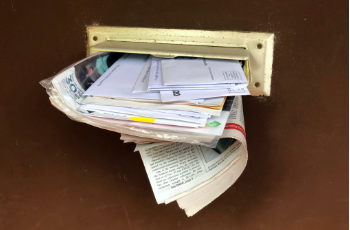
Everyone still gets paper mail, or snail mail as some like to call it. There seem to be about twenty pieces of postal junk mail to every legitimate piece I get so I got to asking myself, how do you stop junk mail from being delivered? After all,  none of us go out and sign up for junk mail, right?

I say reduce because I have never found a way to remove all of the postal junk mail as there are too many small mailers simply mailing to every address in an entire town, this includes a lot of the “occupant” mail you get.

After a lot of research, some trial and error, and asking a lot of questions, I found some really interesting ways that I could substantially reduce the amount of postal junk mail I receive. Below are some of the things I found.

1: Use the return mail envelope

A lot of postal junk mail, particularly from credit card companies, political parties, and non-profit groups will have a return mail envelop that has the return postage paid. Use this envelope to send them a note telling them to stop remove you from their lists. This does two things, it lets them know you want off their list, and that you don’t mind costing them money to make it happen.

I will make one note here, I only do this to postal junk mail from non-profits that I have a distaste for. Too often the term non-profit is used to simply say “after paying our CEO an enormous amount of money, we have nothing left”. I would never do this to what I call a real non-profit like the ASPCA, World Wildlife Federation, etc.

This can take some time because they have to get the postal junk mail back and then process your request so it is not unusual to receive more mail from these people for weeks after using this method.

I like this method because it literally costs them money every time you do this so they are motivated to keep you from doing it over and over again. Even if they really don’t care, it is satisfying knowing that they are in a way getting billed for my time dealing with their postal junk mail. This is about the only way I have figured out how to stop political junk mail, and it doesn’t stop it all.

2: Opt-out of credit card and loan offers

You may have noticed that a large percentage of your postal junk mail is offers of credit or loans. What you may not know is that the vast majority of these offers are mailed using a mailing list from the major credit bureaus and that you can keep all of them from including your information in those lists by filling out one form that takes you about two minutes of your time.

How can you stop this type of postal junk mail? Run over to optoutprescreen.com and fill out the form and you can opt-out of receiving this type of postal junk mail for five years, or download, print out and mail in a form to make it permanent. You will need your name, address, social security number and date of birth to complete the form. Personally I just do the five-year form online and then set a reminder to do it again in about four years so it overlaps.

If you change your mind you can go back to the same website and opt back in which takes about the same amount of time. Then you can start receiving all of that glorious postal junk mail again!

Note that since you are completing a form that is sent to the credit bureaus, who then remove you from their lists that they provide to people who want to make you offers, this can take months before you notice a reduction in the amount of postal junk mail you get from credit card and loan companies.

3: Return to sender

Some mail can simply be marked as refused, or return to sender and stuck back in your mailbox. This also will cost the person who sent you the postal junk mail to have it returned to them. It can be a lot of fun thinking of all the spam being returned to the person who spammed you to begin with.

Note that only some types of mail can be marked this way and returned. To find out if it can, look for some of the following hints:

  • return service requested
  • forwarding service requested
  • address service requested
  • change service requested
  • First Class Mail

My understanding is that if the postal junk mail has any of these markers on it then you should be able to have it returned to the sender. If none of these phrases appear on the mail, you may need to use other methods in this article to stop mail from this company.

Unfortunately, I have never figured out how to stop third class mail delivery, and asking around I don’t think there is a way.

4: Opt-out with the Data & Marketing Association

Stop Postal Junk Mail

A good amount of postal junk mail can be opted out at the Direct Merchants Association, they claim that they represent 80% of the total volume of marketing mail in the United States. Intelligent businesses know that if you don’t want their mail, sending it to you anyway is just going to make you less likely to buy from them. Following that logic, the DMA helps companies clear their lists of people who absolutely do not want to receive their postal junk mail.

There are two downsides here. First, the DMA does not represent everyone who sends postal junk mail, and second, they can assist you in contacting companies that you have already done business with, but they can not stop those companies from sending you postal junk mail.

So why can’t they just stop everyone? Because the rules are different for existing customers and potential customers. For existing customers, you have to deal directly with the company in getting your information removed from their mailing lists. That’s just the way it is.

To have the DMA remove your information from all the lists they can you simply head on over to dmachoice.thedma.org and sign up for an account. Be warned that they will want your email address (and you should not use your real email address, as I mention in my article on stopping spam email) and it will cost you $2 for them to process your requests. This is probably the best way to get rid of junk mail.

5: The last mile

If you are doing all the methods in this article then you should have massively reduced the amount of postal junk mail you are receiving. If the statistics on the websites of the groups we have been using are to be believed, you should have reduced your standard marketing email by 80%, your credit card and loan offers by around 90% as well as been removed from the majority of any non-profit and political postal junk mail.

That last little bit is probably two things; companies you have done business with, and those coupon sheets. Let’s hit them both.

The first is companies you have done business with before, and they are the toughest ones as you have to contact each one, one at a time, and asked to be removed from any and all mailing lists. I usually specify that I want to be removed from any lists and not contacted in any form, at any time, for any reason. This covers phone calls, text messages, emails, and postal junk mail.

While that is time-consuming, it is also usually pretty straight forward as these companies already have you as a customer and know that it takes a lot more work to get a new customer than it does to retain one, so they are usually pretty good about honoring your wishes.

I have recently noticed a trend however that seems that some of these companies are losing sight of this. I recently contacted a Victra, a Verizon Wireless authorized retailer where I bought my phone. I was unhappy because they started spamming me with texts and I wanted them to stop. It seems the manager I finally made it up to was under the impression that spamming his customers was not only okay but “standard business practice”. He also made no effort to stop the spamming. Guess who I am not buying any more phones from?

The second part, those little coupon packs, can be addressed using skulocal.com and RetailMeNot to let them know that you prefer not to receive any postal junk mail from them. Do you wonder how to stop getting circulars in the mail? This is it.

I hope you enjoyed my article on stopping postal junk mail!

5 Ways To Stop Spam Text Messages And Spam Phone Calls

Stop spam phone calls, spam text messages, and robocalls

How annoying is it when you get a spam text messages,  spam phone calls, or robocalls and it is a telemarketer or scammer? For me, it is pretty annoying. Sure, I try to not do business with any organization that practices these methods but that still doesn’t address the flood of companies that still continue to do it. And it isn’t little shady companies either, I had a manager from a large authorized Verizon reseller tell me it was standard business practice for them to spam my phone with text messages.

So how do we stop this assault? The first thing we have to do is define what is and is not acceptable.

If you initiate contact with a company and they reply using the same form of communications, that is perfectly acceptable. If you voluntarily sign up for text alerts etc, that too is perfectly fine. The problem happens when either you have never contacted the company in question, or the company you did contact for something, adds you to a list without your permission, or that permission was hidden in such a way that most normal people would never have noticed.

Another problem is that when you sign up for text alerts with a company, and they not only start sending you text alerts, but spam you with something else too. A good example is the Ring app for the Ring doorbell and the Ring cameras. They have a feature called Neighborhood Alerts which allows you to see doorbell video from people who report suspicious activities, crimes, etc and also gives you crime reports in your area to help keep you safe. You can manage what you see by reporting things you don’t want or are inappropriate, and block certain types of alerts.

All of that is great! But then they added amber alerts and it all went to heck in a handbasket. Why is that? Because the amber alerts are always at the top of the page, can not be turned off, can not be blocked, can not be reported, and take up a huge portion of the top of the screen.

Look, I get missing kids are important, and that is why they come across every single smartphone I know of by default, all automatically. Spamming me with the information over and over again is NOT going to make me magically see the kid, sorry. All it is going to do is make me mad. Having the information is great! But make it so I can turn it off if I get the information somewhere else. As it is, I turned off the entire neighborhood alerts feature.

So now you know what I mean by spam text messages, robocalls, and spam phone calls, how do we get them to stop?

1: Sign up for the FTC’s Do Not Call list

The FTC maintains a list of numbers that most telemarketers are supposed to use to remove numbers from their call lists. While the list is far from perfect, it allows political calls, for example, it is a great place to start.

No, not all telemarketers and robocallers follow the list even when they are legally obligated to do so. And if they are based outside the US, the list is completely useless. But even if the list only applies to 25% of the people spamming you, and even if only half of those follow the list, at zero cost to you and five minutes of your time you can eliminate over 12% of the junk you are getting. Even if it only stops 1%, its a deal.

The list is permanent, you do not have to update your registration.

No other method on this list will offer you that much of a reduction in spam text messages, robocalls, and spam phone calls with that little time, effort, and money.

2: Simply don’t give out your number

I know this seems a little too simple, but you would not believe how effective it can be. A lot of companies out there say they “need” your cellphone number when they really don’t. Do you really need to have Walmart text you when your prescription is ready or can you just go by on your way home because they always have it ready by then?

Think before you give out your number. If there is a legitimate reason they really need your number, or if giving them the number saves you a significant about of time or effort, then go for it. If not, then just tell them you do not give out your personal number to anyone, period.

Back in the old days, if you gave out your home phone number to someone (who has those anymore, heh), they could only bother you when you were at home. Out shopping, having dinner with friends, driving down the road, on vacation, these were all safe times when you could relax. No more. Take that into consideration when thinking about giving out your number.

3: Use an app

There are a lot of apps out there that can help stem the tide of robocalls, spam text messages, and spam phone calls. The top three in my mind are Hiya for a free app and both NoMoRobo and RoboKiller for paid apps.

These apps work in a variety of ways which includes matching incoming numbers with lists of known spam numbers, matching the message contents with known spam text message profiles, and much more. They do a relatively good job.

My personal favorite free app is Hiya. It is fairly simple to install and use and shows you on your lock screen if it thinks the call is spam or not. They offer a paid version as well which seems to be pretty much the same thing but with a few added features such as automatically blocking known or suspected spammers and scammers. The premium version is about $3 a month or $15 per year.

If you are going to pay, Hiya is not a bad choice, but NoMoRobo is probably a better option as it seems a little more effective and also filters SMS spam text messages as well, which Hiya does not. It is also the app that won the FTC’s Robocall Challenge to find the best solution to the robocall and telemarketing problems.

The cost is a tad odd when compared to Hiya because it is cheaper per month at $2 compared to $3, but more expensive per year costing $20 as compared to $15. Strange, but still so very much worth the $20 per year.

I should also point out that NoMoRobo also claims to allow in legitimate robocalls such as school closings and prescription reminders which I think is not only a cool feature but also a possible way for scammers to get through so it may be a wash.

The last app, and most expensive, is RoboKiller. It is probably just as effective as the previously discussed apps and includes text message filtering, but where it shines is that it doesn’t just block the telemarketers, it sends them to bots that actively engage them in a conversation!

So why would you want the bot to talk to the telemarketer? Because many of these telemarketers get paid by the number of calls they make, even if the person doesn’t answer, so getting them into a conversation with a computer lowers their income, wastes their time, and annoys the heck out of them whether they figure out they have been played or not.

The revenge factor here alone is worth the money. To make it even better, you can select from a series of bots to pick which one handles telemarketers on your end. It then can record these conversations so you can play them back later to get a great laugh. Many people have even posted these conversations online allowing everyone to get a chuckle at the telemarketer’s expense.

So in conclusion, I recommend Hiya for people who want something free, NoMoRobo for anyone who just wants a serious app that does an excellent job, and RoboKiller for those who want spend an additional $5 a year for a little revenge and humor.

4: Use your phone’s built-in protections

In most modern phones today you can block numbers with ease. The problem is that the people making spam phone calls, sending spam text messages, and robocalls often change numbers so fast that you would be blocking numbers forever. There is another option.

On both iOS and Android, there is a way to tell the phone to only accept calls from people who are in your contacts list.

For iOS turn on Do Not Disturb, then scroll down to Allow Calls, and select All Contacts. This absolutely allows people to call you and to leave voicemails, and all the calls, even from spammers and telemarketers, will show up in your call logs and voicemails (if they leave one), it will not, however, ring the phone or notify you that the call has occurred.

Personally, I like this option as the only people I am really concerned about answering the phone as they are calling are in my contact list. Anyone who is not can leave a voicemail if it is important and I will get back to them.

On Android simply swipe down from the top of your home screen and select Do Not Disturb, then you can select Priority Only and click the customize link. Now you can set the options for text messages and phone calls both to From Contacts Only.

This may not work for everyone and has no protection against spam texts but it is free, easy, and very effective at keeping you from being disturbed by spam phone calls, robocalls, and spam text messages.

I should also mention that Andriod also has some rudimentary spam protection built right into the phone. You can enable this by opening the phone app, tapping on the three dots at the top right, tap Settings, tap Caller ID & Spam, flip the switch for Filter Spam Calls. This will cause the phone to show you when a text or call might be spam.

5: Use the options provided by your carrier

Most cellphone carriers these days have their own spam blocking capabilities and provide these services to their customers. Many like Verizon offer a two-tier approach which includes a free tier for basic spam filtering and a paid tier which provides additional options. These vary so widely and change so often that it is pointless to discuss much in this article.

What is important is that like most apps from your mobile carrier these seem, at least for now, more a way to generate additional income without a lot of substance.

By that, I mean that from all of the information I have seen, and all of the apps I have tried, the third-party apps offer substantially more bang for your buck. It would seem that the telephone companies would have better technology to be able to identify and stop spam phone calls, spam text messages, and robocalls but that does not seem to show up in their apps.

In fact, I find it interesting that their products require apps at all. Since they are the ones providing the caller ID to your phone, can they not just replace the caller ID with a caller ID that has a tag added to the end? For example, the caller ID might originally read “Acme Loans” and they could change it to say “Acme loans – SUSPECTED SPAM” or something similar.

If they knew the call had a spoofed caller ID, or that the call was an illegal robocaller, etc, then they should be able to outright block the call. Again, no app needed.

I hope you enjoyed my article on blocking spam phone calls, spam text messages, and robocalls!

5 Ways To Stop Spam Email From Getting To Your Inbox

Stop Spam Email Now!

For years I have worked on trying to stop spam email, and it is always a battle. I have finally managed to tame it to the point where it is tolerable (that means I get virtually no spam email in my inbox). In this article, I will share my methods with you. There is nothing for sale, nothing to buy, nothing you have to click on and sign up for, just some ideas that might help. If any of these do help, all I ask is that you point your friends here so they too can tame the spam beast.

Let me start by saying I totally get why companies want to get your email address, and I understand that sometimes it is marketing through those email addresses that allow them to provide the services that they do. I get it, really. The problem is that it is so universally abused that it is way out of control.

If the people harvesting your email address never sold it to a spam email list, only send you emails that you double-opted in for, and then honored removal requests, then this article would not exist. Add to that the number of people who will send you spam trying to steal your credit card information or spread a virus. Unfortunately, this is not the case in a huge number of people who want your email address so sometimes you have to hurt a couple of people who didn’t do anything wrong in order to tame your inbox.

I would also recommend that you not attempt to get spam email revenge. What happens is resources that could be used to help stop spam from reaching your inbox are instead used to help the spammer instead. Not to mention the, at best, questionable legality of it.

Now let’s give the term spam email meaning (spam meaning). Spam email to me (and only me), is any email I did not explicitly ask for, or that I would normally expect as a normal course of conversation that I initiated. So if I place an order online, and I gave them my email, I expect an order confirmation and maybe a shipping notice. Anything else, spam.

So, how do you stop unwanted email? Read on and let’s see!

1: Don’t give out your email!

Don't give out your email to stop spam email

That’s right, just say no. I know it is had to believe but all those companies that say you have to give them an email, most of them are lying. I have bank accounts with apps on my phone, no email. I have Verizon smartphones and tablets, and Verizon doesn’t have my email. I have bought new cars from the dealer, with no email address. I know, it’s tough when they are in the middle of asking you thirty questions and up comes the “your email address?” question, just train yourself to say “I don’t have one”. End of conversation.

If that doesn’t work give out a fake one. It’s not like they can check it while you are in line at the store. This will absolutely stop spam email.

2: Use a disposable email for online accounts

Need access to an online resource that requires you to validate your email address before they will let you in? Use a service such as 10minutemail.com which is a completely free site that allows you to get a disposable email address that lasts for, you guessed it, ten minutes. This is one of my favorite ways to get past those sites that just want to harvest your email address, and then sell it so their service can remain free.

disposable email addresses to stop spam email

The downside here is that once you are finished here and ten minutes has expired (you can extend it in 10-minute increments by clicking a button) and closed the web page, that email address is gone and you can never use it again.

3: Use an email service with outstanding email filtering

No matter what you do, you can not completely stop spam email. It is important to have a good spam filter to get rid of the spam you do get. Even if you follow all the rules you will eventually get on a spam list. How is that you might ask?

Email addresses are made up of two parts, the user and the domain. If your domain name is YourDomain.com, then all someone has to do is start sending out emails using a username generator, spam email generator, or spam mail generator which will start with a, b, c, d, …….aa, ab, ac, ad, ….. and so on, millions of them. Their system then watches for the bounced messages and removes those from the list. What remains are valid email accounts and they can sell or use the list they created themselves. Remember, this isn’t a person doing this work, it is an email spam bot, a computer, all automatically. The spam email bot works around the clock.

Yes, people actually do this. Heck, companies actually do this.

So back to my original point, spam filtering. One of the best spam filters I have seen is on Google’s Gmail service. If you have your own domain name you can use their GSuite services and run all your email off their servers. Otherwise, you can set up a free Gmail account and have it check your email from another service, using the Google filters to clean it up before you see it.

Other services can be good as well, I have had good luck with Microsoft Outlook online’s filters, and many web hosting companies such as GoDaddy and 1and1. Just remember, no matter how good your email or hosting services are, if their spam filters aren’t working, you are wasting time and money. Switch to a better service today and let them help you stop spam email.

4: Use a staging address

Staging email addresses

A staging address is a secondary email address you use to test if someone is going to spam you. It protects you against a specific company continuing to email you after you ask them not to. For example, you sign up for a rewards card with EvilSpamCompany, and all of a sudden you start getting a ton of marketing from marketing@EvilSpamCompany.com, welcome@, promotions@, sales@ and a whole host of other names, all at EvilSpamCompany.com. This can stop that cold.

Let’s say your email is danny@YourDomain.com. You can create the email address of spam@YourDomain.com and give that out to everyone who asks for an email. Then you set up a forwarder to forward all mail from spam@ to danny@. Once you see you are getting spammed by EvilSpamCompany.com you can simply blacklist their domain and you will no longer get emails from them forwarded into your danny@ inbox.

So you are thinking, why not just do the same thing on your danny@ account and skip the whole second account with forwarders thing? Wouldn’t this still stop spam email? Good questions! The reason is that because now EvilSpamCompany does not have your real email and if they were to give it away or sell it, your real email address is still protected.

If you have someone using the spam@ email address for quite a while and you do not receive anything you consider spam from them, it should be a simple matter to contact them and change your email address over to your real one.

5: Use multiple staging addresses

The problem with the previous way to stop spam email is EvilSpamCompany might never once send you a spam email themselves but may sell your email address a hundred times getting you inundated with spam, all while their hands look clean. There is a way to stop this too, by having every company have their own staging address.

Most web hosts today allow you to have an unlimited number of email addresses for your domain. You need this or at least a very high number of allowable email addresses for this plan to work.

Use multiple staging addresses to stop spam email

What you do is that for every company that needs your email address, you give them their own spam email address.  A good example might be to use the company name, a dot, and SP for spam. So let’s say you signed up for a rewards program put on by Target and another one by Walmart. Those two email addresses could be target.sp@YourDomain.com and walmart.sp@YourDomain.com respectively.

Now when using this setup you find out not only which companies are spamming you directly, but also which ones are selling your email address to others. When you find one that is spamming you or that has sold your address, simply delete that email address from your server and that will stop spam email from them and everyone they sold your address to as well.

While this is by far the most effective method, it is also the most time consuming and requires you to have your own domain name and service that allows you to create, check and delete email addresses easily.

Bonus tip!

When you get spam there may be an unsubscribe link at the bottom of the email. If this is a reputable mailing list like one from Macy’s letting you know what is on the current sale, then that link is probably perfectly fine to click on to get removed from their mailing list and stop spam email.

I say probably because no one said it really came from Macy’s. You need to check the actual email address it came from and make sure it is macys.com, or something like mailings.macys.com, note that it always should end in macys.com. If you see something like macys.com.ru, or macysmailing.list@gmail.com, then those are fake emails which you should never click on any links or buttons in.

The other problem here is that if this is not a reputable mailing list, that same link might be used to verify that you actually read these spams and instead of this being able to stop spam email, it actually can increase it. Clicking the link might actually take you to a page that appears to allow you to remove your email address from a mailing list, but that could all be fake.

My recommendation is to never click on the unsubscribe link unless you are certain that this is a list you signed up for and want to be removed. In my example above, making a purchase from Macy’s very well might have put you on their mailing list so it would be safe to assume it was a legitimate email and to click the unsubscribe link after verifying it came from macys.com.

I hope you enjoyed my article on 5 ways to stop spam email!